
New Dog Checklist: Everything Your Dog Actually Needs (And What's a Waste of Money)
By Carl Thompson · 12 min read · May 2026
What to buy before your dog comes home — and what to skip.
Affiliate disclosure — We earn commissions from qualifying purchases. Rankings reflect genuine assessment.
I brought my first dog home when I was 26. I spent $400 at PetSmart the day before he arrived, convinced by packaging and my own anxiety that I needed everything on the shelf.
Half of it sat unused for years. The other half I threw out within a month and replaced with things that actually worked.
Eleven years and two dogs later, I've tested more pet products than I can count. This checklist is what I'd tell my 26-year-old self — what you actually need, what to skip, and which specific products I'd buy if I was starting over today.
I've organized this by priority. The first section is genuinely required before your dog comes home. Everything after that can wait a day or two, but you'll want it soon.
Before Your Dog Comes Home
A Crate
A crate is not a cage. Used correctly, it's your dog's room — a place that's theirs, that feels safe, that you can use for training and for giving your dog somewhere to decompress. Almost every trainer I've spoken to over eleven years recommends crate training. I've never regretted it with either of my dogs.
Size matters. Your dog should be able to stand, turn around, and lie down comfortably. For puppies, get a crate with a divider so you can expand it as they grow — this also prevents them from using one end as a bathroom.
For large breeds and power chewers: Most wire crates hold up fine for average dogs. For dogs that are serious about escape attempts or destructive anxiety, you need something heavy. The MidWest iCrate is the workhorse option — affordable, well-made, available in every size. For dogs that have actually bent wire crates, the Midwest Ovation or a heavy-gauge welded wire crate is worth the premium.
For smaller or moderate dogs: MidWest iCrate in the appropriate size. Don't overcomplicate it.
Available on Chewy and Amazon. Get the size chart right — measure your dog's length nose to tail and add 4 inches.
Food and Water Bowls
Stainless steel. Not plastic, not ceramic unless you know the ceramic is lead-free and properly glazed.
Plastic bowls scratch easily, harbor bacteria, and have been linked to canine acne in dogs with sensitivities. Ceramic can chip. Stainless steel is dishwasher safe, durable, and inert.
Top pick: Frisco Stainless Steel Dog Bowl (available on Chewy) — simple, heavy enough not to slide, appropriately sized. Get two: one for food, one for water.
For large dogs that eat fast and are at risk for bloat, a slow-feeder bowl is worth adding. The Outward Hound Fun Feeder is the one I've used with Ruger — it genuinely works.
A Collar and ID Tag
Your dog needs a collar and an ID tag before they leave the house for the first time. Full stop. This is the item on this list where skipping it has the highest consequence.
Collar: For puppies and adult dogs without pulling issues, a flat collar in the correct size. Frisco Solid Nylon Dog Collar on Chewy is fine and inexpensive. Measure your dog's neck and add two fingers of slack.
For large breeds and strong pullers, I'd go straight to a martingale collar — it tightens slightly when pulled but can't slip over the head. The Ruffwear Flat Out Collar is my recommendation for durability.
ID tag: Get it engraved with your phone number and address before pickup day. Chewy, Amazon, and most pet stores do same-day or next-day engraving. A microchip is not a substitute — it requires a scanner and a vet. A tag gets your dog home in ten minutes if someone finds them on the street.
A Leash
Six-foot flat leash, nylon or leather. That's it.
Retractable leashes are not recommended for new dogs — you can't control the distance, they teach dogs to pull, and the thin cord is a hand injury risk. Buy a retractable leash once your dog has solid leash manners, if ever.
Top pick: Ruffwear Flat Out Leash — comfortable grip, solid hardware, holds up to pulling. Available on Chewy and Amazon.
For very large or very strong dogs, a 6-foot traffic leash with a second handle near the clip gives you control close to the dog when needed.
Dog Food
I'm not going to tell you exactly what to feed your dog. Nutrition is genuinely complicated, individual dogs have different needs, and your vet knows your dog better than I do. What I will tell you is the framework.
Read the ingredient list. The first ingredient should be a named protein source — "chicken," "beef," "salmon." Not "meat meal," not "poultry by-product." A named protein.
Avoid artificial preservatives where possible. BHA, BHT, and ethoxyquin are on my avoid list.
Life stage matters. Puppies need puppy food. Large breed puppies specifically need large-breed puppy formulas — they're designed for controlled growth rates that reduce joint problems later. Don't feed a great dane puppy the same formula as a chihuahua puppy.
My starting point recommendations:
- Royal Canin — breed-specific and size-specific formulas backed by research. More expensive, worth it.
- Hill's Science Diet — vet-recommended, well-researched, widely available.
- Purina Pro Plan — good quality at a more accessible price point.
All three are available on Chewy with Autoship discounts. Set up Autoship from day one — you'll save 35% on the first order and 5% on every subsequent delivery.
Treats for Training
You will be doing a lot of training in the first weeks. You need small, soft, high-value treats that your dog will work for.
Zuke's Mini Naturals are my go-to — small enough that you're not overfeeding during a training session, soft enough for puppies and older dogs, and dogs consistently work hard for them. Available on Chewy and Amazon.
For dogs with dietary restrictions, Wellness Soft WellBites have limited ingredients and come in several protein options.
Buy two bags before your dog arrives.
The First Week
A Dog Bed or Crate Pad
Something comfortable for your dog to sleep on inside the crate — or outside it if you're not crate training.
For chewers: Do not buy an expensive orthopedic bed first. Buy a K9 Ballistics Tough Orthopedic Dog Bed if you have the budget for something chew-resistant, or a simple Frisco Sherpa Bolster Bed on Chewy as a lower-cost option that's replaceable. Ruger destroyed three beds before I found materials that held up.
For non-chewers: The Big Barker Orthopedic Dog Bed is the best orthopedic dog bed I've tested — particularly for large breeds that will live with joint issues as they age. Worth the investment if your dog isn't going to destroy it.
Toys
Here's my actual recommendation for new dog toys: buy less than you think you need and figure out what your dog likes before committing.
Every dog has preferences. Some dogs love plush. Some ignore plush and live for rubber. Some dogs want to fetch, some want to tug, some want to chew. You won't know until you watch your dog.
Start with a KONG Classic in the appropriate size. Stuff it with peanut butter or kibble. This single toy has kept more dogs occupied than anything else I've recommended — it works for almost every dog, it's nearly indestructible for average chewers, and it's available everywhere.
If your dog destroys the KONG, that's important information. It means you have a power chewer, and you should be looking at Bullymake toys and similar heavy-duty options rather than standard pet store rubber.
For power chewers specifically: A Bullymake subscription box is the most efficient way to find durable toys your dog will actually engage with. The first box is $19 and lets you choose toy material type — nylon, rubber, or ballistic fabric. If your dog is a serious chewer, this is a better investment than buying toys one at a time from a pet store.
Enzymatic Cleaner
Buy this before you need it. You will need it.
Nature's Miracle Stain & Odor Eliminator is the standard recommendation and it's correct. Enzymatic cleaners break down the organic compounds in urine and feces rather than masking the smell — this matters because dogs will return to spots they can still smell even if you can't. Standard cleaners don't solve this.
Keep a bottle in every room for the first month.
Puppy Pads (if applicable)
If you're bringing home a puppy and live in an apartment or don't have easy outdoor access, puppy pads give you an intermediate option while you're building the outdoor routine.
Frisco Training Pads on Chewy — large size, good adhesive tabs to keep them in place. Don't overthink this.
Within the First Month
A Harness (for pullers)
If your dog pulls on leash — and most dogs do when they're new and excited — a front-clip harness redirects the pulling rather than fighting it.
Top pick: Ruffwear Front Range Harness. Comfortable, durable, and the front-clip attachment genuinely reduces pulling without pressure on the throat. Available on Chewy and Amazon.
Do not use a prong collar or choke chain without guidance from a professional trainer. These tools can be effective in the right hands and genuinely harmful in the wrong ones.
A Long Line for Recall Training
A 15–30 foot long line gives your dog freedom to explore while you work on recall — "come" — in a controlled way. This is foundational training that every dog should have, and you can't do it on a 6-foot leash.
Biothane long lines are the best material — waterproof, easy to clean, doesn't tangle like nylon. Available on Amazon.
Nail Clippers or a Grinder
Dog nails need regular maintenance. Overgrown nails affect gait and can become painful. A groomer handles this, but so can you if you're willing to learn.
Dremel 7300-PT Pet Nail Grooming Tool — a nail grinder rather than a clipper. Less risk of cutting the quick, better for dogs that are sensitive about their feet. Slower process but more forgiving.
If your dog is already anxious about nail handling, start touch-conditioning the paws early before you try any nail work.
Dental Chews
Dental disease is the most common health issue in dogs and the most preventable. Most dogs won't tolerate tooth brushing without significant conditioning, but dental chews do meaningful work in the interim.
Greenies are the most research-backed option and the one I give Ruger. Size-appropriate — the packaging has a weight guide. Available everywhere.
A Subscription Box (Once You Know Your Dog)
I deliberately put this at the end of the list because the right subscription box depends on what kind of chewer your dog is — and you need a few weeks to figure that out.
Power chewer: Bullymake. The only box built for dogs that destroy things. First box $19, then $39/mo. Choose your toy material type.
Average to moderate chewer: BarkBox. Great variety, fun themes, solid treats. Standard box is fine for most dogs; Super Chewer variant for dogs that are tougher on toys.
Puppy: PupBox. Age-calibrated contents that change as your puppy grows. Includes training accessories. Switch to Bullymake or BarkBox when they reach adulthood.
Once you know your dog's chew profile, a subscription box is the most efficient way to keep them in toys and treats without thinking about it. The best ones ship monthly and solve the "what do I buy my dog this month" problem permanently.
What I'd Skip (At Least Initially)
Fancy dog clothes. Unless you have a short-coated small breed in a cold climate, your dog doesn't need a wardrobe.
Puzzle feeders (immediately). Great products, but your dog needs to settle in before you add cognitive complexity. Give it a few weeks.
Multiple beds in multiple rooms. Buy one good bed, see where your dog actually sleeps, then decide if you need more.
Expensive toys before you know what your dog likes. I've seen dogs ignore $40 interactive toys and spend three days obsessing over a $3 tennis ball.
The Short Version
- Crate — MidWest iCrate, right size
- Bowls — stainless steel, two
- Collar — flat collar or martingale, with ID tag engraved
- Leash — 6-foot flat leash, Ruffwear Flat Out
- Food — Royal Canin, Hill's Science Diet, or Purina Pro Plan; set up Chewy Autoship
- Training treats — Zuke's Mini Naturals
- Bed — K9 Ballistics if they're a chewer; Big Barker if they're not
- KONG Classic — start here for toys
- Nature's Miracle — buy before you need it
- Nail grinder — Dremel 7300-PT
- Dental chews — Greenies
- Subscription box — Bullymake (power chewers), BarkBox (everyone else), PupBox (puppies)
Everything on this list is available on Chewy. Set up Autoship on the food and treats on day one — the 35% first-order discount is real money, and the automatic delivery means you never run out.
This article was written by the editorial team at ToughDogToyReviews.com. We test and research all recommended products. We earn affiliate commissions on qualifying purchases — this doesn't affect our recommendations. See our Advertiser Disclosure for full details.
Ruger's pick: Bullymake
The only subscription box built for dogs that destroy everything.
First box $19 →
About the Editor
Carl Thompson has owned dogs for over 20 years and has spent the last 11 testing gear with Ruger, his 72lb American Staffordshire terrier. Every product reviewed on Tough Dog Toys is based on real-world experience. Carl uses affiliate links to keep the site running.
More from the blog

9 min read
Best Indestructible Dog Beds (2026): Tested on Dogs That Destroy Everything
We tested indestructible dog beds on dogs that destroy everything. Here's what actually holds up.
Read more →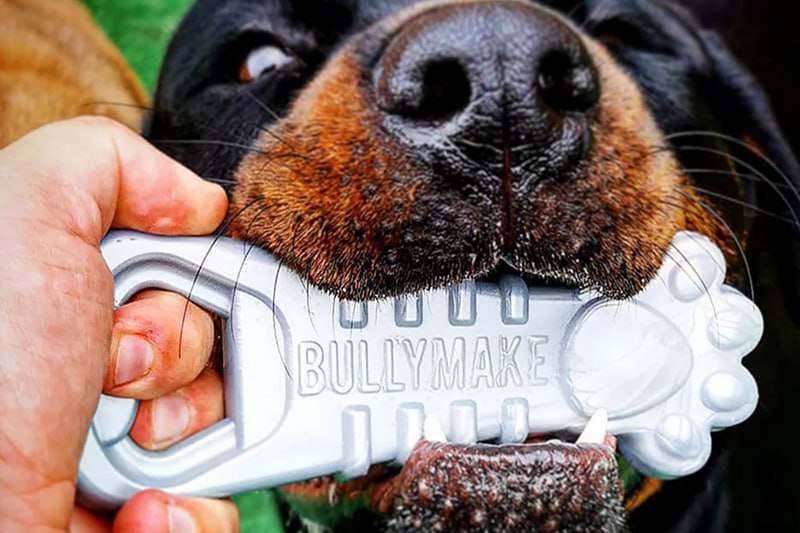
5 min read
Best Toys for Aggressive Chewers: What Actually Lasts
Finding a dog toy that lasts more than a week is harder than it should be. Here's what actually holds up.
Read more →
8 min read
We Tested 10 Dog Subscription Boxes. Here's the Honest Truth.
Four dogs, four chew profiles, four months of testing. What held up and what didn't.
Read more →